Prior authorization services manage the approval a payer requires before it covers certain procedures, drugs or tests. They verify coverage, check payer rules, submit clinical documentation, track each request and follow up on denials. Done well, they prevent schedule delays and claim denials. Done poorly, care waits and revenue is at risk.
One Missing Page Can Stall a Whole Procedure
A scheduled procedure, a complete chart and a missing authorization. That is all it takes to push a visit back and put the claim at risk. The AMA’s 2024 physician survey found that practices complete 39 prior authorization requests per physician each week, and that physicians and staff spend about 13 hours a week on them, which is why many practices look at prior authorization services.
Prior auth for providers is rarely one big failure. It is many small gaps: a rule missed, a note left out, a request nobody followed up. MedVoice backs its billing with a denial rate of less than 3% and a 98% clean claim submission rate, and that starts before the claim is built. This guide covers the prior authorization process, the common delays and how prior authorization services help when you outsource them.
Figure 1: A prior authorization request moves through six steps, and each needs an owner.
Key takeaways
- Prior authorization services cover the whole request, from coverage check to decision and claim link.
- The prior authorization process breaks down most often in documentation, payer rules and follow-up.
- CMS-0057-F sets decision timeframes for certain payers, which prior authorization services should track.
- Prior auth for providers works best with one named owner for every request.
- Prior auth for providers gets lighter when outsourced, because clinical staff skip the calls and portals.
What Are Prior Authorization Services in Medical Billing?
Prior authorization services manage the approval a payer requires before it will cover certain services, drugs or procedures. The work includes checking coverage, confirming payer rules, submitting clinical documentation, tracking each request and following up on denials. The approval then has to reach the claim, which is where billing and authorization meet.
Prior authorization, also called pre-authorization or prior auth, is how a payer confirms coverage or medical necessity before care is delivered. It sits at the front of the revenue cycle, but it decides whether the claim at the back gets paid. That is why MedVoice’s billing services include insurance verification, eligibility checking and prior authorization management.
Typical prior authorization services cover:
- Payer rule lookup by plan and procedure code
- Request preparation and submission
- Status tracking and follow-up
- Denial, appeal and resubmission support
- Matching each approval to the claim
How Does the Prior Authorization Process Work Step by Step?
The prior authorization process runs in six steps: verify coverage, confirm payer rules, gather clinical records, submit the request, track its status and resolve the decision. Each step protects the schedule and the claim, and a gap at any step usually shows up later as a delay, a denial or rework.
- Step 1, verify coverage: confirm the plan is active.
- Step 2, confirm payer rules: check whether the procedure, drug or test needs approval under that plan.
- Step 3, gather records: collect notes and results that match the payer’s criteria.
- Step 4, submit: send the request through the payer’s accepted channel.
- Step 5, track status: check progress against the payer’s decision window and follow up early.
- Step 6, resolve the decision: record the approval number and dates, or appeal or resubmit a denial.
Payer rules, forms and turnaround times vary by payer and state, so the same procedure can need different handling from plan to plan.
What Do CMS Rules Mean for Prior Auth for Providers?
CMS rule CMS-0057-F sets decision timeframes for certain payers: 72 hours for expedited requests and seven calendar days for standard ones, from January 1, 2026. It also requires specific denial reasons. It does not cover every plan, so prior auth for providers still varies by payer.
| Rule element | What it means for your practice |
| Decision timeframes: 72 hours expedited, 7 calendar days standard (from January 1, 2026) | Track requests against these windows when the plan is covered |
| Specific denial reasons (from 2026) | Clearer reasons make appeals and resubmissions easier to target |
| Prior Authorization API (from January 1, 2027) | Electronic requests and status checks may get easier to run through your systems |
The rule applies to payers such as Medicare Advantage and Medicaid plans. Confirm which of your plans are covered, and current dates, with CMS and each payer.
What Common Delays Hold Back Prior Authorization Services?
The most common prior authorization delays are incomplete documentation, missed payer requirements, code or unit mismatches, unclear ownership and weak follow-up. Most are process gaps rather than payer surprises, so a clear workflow and a named owner keep prior auth for providers moving.
| Delay | What it causes |
| Incomplete documentation | Requests are returned for more information |
| Payer rule missed | Authorization is discovered after scheduling or after the service |
| Code or unit mismatch | The approval does not match what is billed |
| Unclear ownership | Requests sit with no one watching the payer deadline |
| Weak follow-up | Denials are found too late to appeal on time |
| Expired or used-up approval | Claims deny despite an earlier approval |
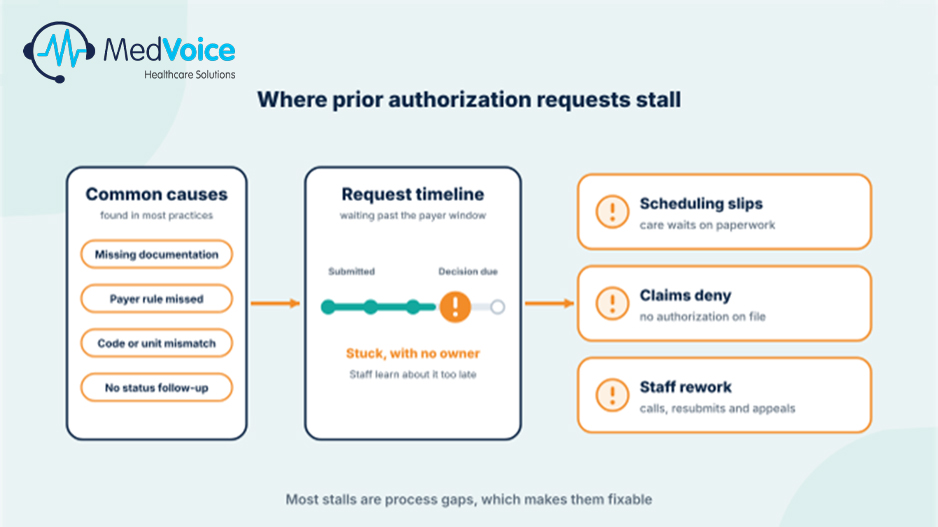
Figure 2: Most stalls come from process gaps, which makes them fixable.
How Does Outsourcing Help With Prior Authorization Services?
Outsourced prior authorization services give a practice a dedicated team that checks rules, builds complete requests, tracks every status and links approvals to claims. That frees clinical staff from phone calls and portals. Prior auth for providers works best when one owner follows each request to a decision.
- Dedicated follow-up: someone watches every open request against the payer window.
- Consistent checklists: requests go out with the documents each payer expects.
- Fewer front desk hours: calls, portals and fax work move off your team.
- Claim linkage: approval numbers and dates reach the claim before it goes out.
The AMA survey found about 40% of physicians have staff who work only on prior authorizations. For many small practices, a full-time role for prior authorization services is hard to justify.
Not sure where your prior authorization process loses time? MedVoice offers a free revenue audit of your billing workflow, authorizations and denial patterns. Request a free revenue audit today.
What Are the Best Practices for Prior Auth for Providers?
Good prior authorization services come down to a few habits: check requirements before scheduling, front-load documentation, submit electronically where possible, assign one owner per request, follow up on a fixed rhythm, track results by payer and attach every approval to the claim.
- Check before scheduling: keep a payer and procedure code list and confirm status before you book.
- Front-load documentation: capture notes at the visit and match them to payer criteria.
- Submit electronically: use portals, clearinghouses or EHR tools where the payer accepts them.
- Assign one owner: one person follows each request from submission to decision.
- Follow up on a rhythm: shorter checks for urgent requests, regular checks for standard ones.
- Track by payer: approval rate, turnaround and denials show where the prior authorization process leaks.
- Attach to the claim: record the approval number, dates and units before billing.
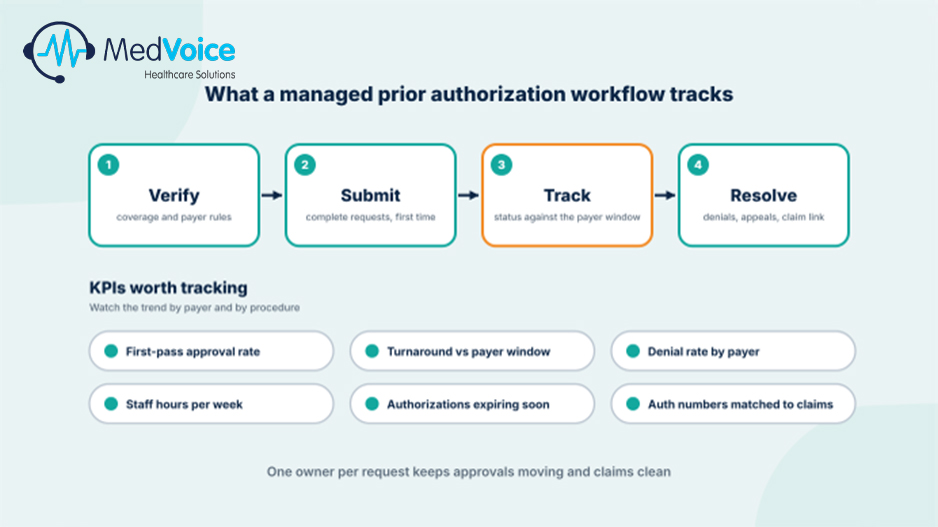
Figure 3: A managed workflow and a short KPI list keep requests moving.
How Does Technology Support the Prior Authorization Process?
Technology supports prior authorization services by flagging services that need approval, building checklists from payer rules, tracking status and alerting staff before deadlines. AI tools offer suggestions for human review, so your team confirms every request, approval and denial instead of watching each one by hand.
MedVoice includes proprietary AI tools, such as medical billing software and an AI medical scribe and coding tool, with billing services. These tools produce suggestions for human review, and your team keeps the final call.
How Does MedVoice Support Prior Authorization Services?
MedVoice supports prior authorization services through insurance verification, eligibility checking and prior authorization management inside its billing services, tied to claim checks and denial follow-up. Pricing starts as low as 3% with no hidden fees, and every process is HIPAA-compliant.
- Insurance verification and eligibility checking
- Prior authorization management for requests that need approval
- Claim checks that look for authorization requirements before submission
- Denial follow-up through our denial management services.
These sit inside full revenue cycle management, from front-end verification to payment. See how it fits together on our medical billing services page.
Related reading: optimizing patient intake for faster payments, the ROI of outsourcing medical billing and how AI reduces claim denials.
Quick Guide: Are Your Prior Authorization Services Working?
Use this checklist to see where your prior authorization process stands. If you cannot check every item, start with requirement checks before scheduling and a single owner for every open request. Each gap lets a request stall without anyone noticing.
| Check | What to confirm |
| Requirements | Rules are checked by payer and procedure before the visit is booked |
| Ownership | Every open request has one named owner |
| Tracking | Status is checked against the payer’s decision window |
| Denials | Denials are appealed or resubmitted before the deadline |
| Claims | Approval numbers, dates and units are on the claim |
Where Should You Start With Prior Authorization Services?
Start with three things: check requirements before scheduling, give every request one owner and track each request against the payer’s window. Those habits are simple to set up, and they show quickly where prior authorization services, in-house or outsourced, can save your team time.
You do not need a new system to improve your prior authorization process. You need clear rules, a named owner and someone watching the clock. MedVoice can take prior authorization services and prior auth for providers off your clinical team and keep approvals tied to clean claims.
Want fewer stalled requests and cleaner claims? Start with a free revenue audit or schedule a consultation. Schedule a Consult or call 972-755-5474.
Email: sales@medvoiceinc.com | Phone: 972-755-5474 | Toll free: 855-215-5906
Frequently Asked Questions
What is the difference between prior authorization and a referral?
A referral is usually a request from a primary care provider to see a specialist, and some plans require one before they cover the visit. Prior authorization is the payer’s approval for a specific service, drug or procedure. A plan can require one, both or neither, so check each payer’s rules.
How long does the prior authorization process take?
It depends on the payer, the plan and how complete the request is. Under CMS-0057-F, certain payers must decide expedited requests within 72 hours and standard requests within seven calendar days from 2026. Other plans set their own timeframes, so track each payer’s window.
Can a practice still get paid if an authorization was missed?
Sometimes, but it is difficult. Some payers may allow a retroactive review in limited cases, while many deny the claim outright. Rules vary by payer, plan and state, so check the contract and appeal deadlines. Prior auth for providers is safer when requirements are confirmed before scheduling.
Should a practice outsource prior authorization services or keep them in-house?
It depends on volume and staffing. In-house work suits a practice with a dedicated person who can track every request. Outsourcing helps when requests pile up, clinical staff spend time on calls or approvals do not reach claims. Ask any partner who owns each request and how status is reported.
What should a practice track to improve prior authorization services?
Track first-pass approval rate, turnaround against the payer’s window, denial rate by payer, staff hours spent each week and approvals nearing expiry. Review them by payer and by procedure, because the trend shows where requests stall. A shared report keeps clinical, front desk and billing teams on the same numbers.
This article is for general information. Prior authorization requirements, forms and timeframes vary by payer, plan and state. Confirm current requirements with each payer, CMS and your compliance team.
Sources
CMS, Interoperability and Prior Authorization Final Rule (CMS-0057-F) fact sheet (decision timeframes, denial reasons, reporting and API dates, covered payers)
AMA, Fixing prior auth: Nearly 40 prior authorizations a week is way too many (2024 survey of 1,000 physicians: 39 requests and 13 hours a week, 40% with dedicated staff)
Wing Assistant, Prior Authorization Process: Step-by-Step Guide for Clinics (process steps, common causes of delay, ownership and follow-up)
Prosper, 5 Prior Authorization Best Practices (best practices and KPIs)